KAIRUI FENG · 冯恺睿
Reinforcement learning
for the physical world.
I build AI4S systems that move from scientific models and digital twins to reliable decisions on real machines.
让强化学习走出仿真,在真实科学与工程系统中产生可测量、可复现的效果。
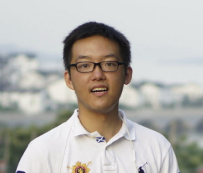
Professor
Tongji University
National Key Laboratory of Autonomous Intelligent Unmanned Systems
RESEARCH PROGRAM
Prediction is only the beginning.
I am interested in the full loop: learning a scientific world model, making decisions under uncertainty, and validating those decisions in physical systems.
RL for AI4S
Safe, robust, and data-efficient sequential decision-making for systems governed by physical laws.
面向物理系统的安全、鲁棒、数据高效强化学习。
- AI4S surrogate environments
- Sim-to-real and digital twins
- Climate, energy, and autonomy
Scientific foundation models
General-purpose AI4S models that act as learned surrogates for broad classes of ODE/PDE systems.
面向多类科学系统的通用基础模型,以可迁移的神经代理统一逼近由 ODE/PDE 控制的复杂动力学。
- General ODE/PDE surrogates
- Transfer across equations and scales
- Differentiable simulation for control
Efficient & principled learning
Inference acceleration, optimization, and training theory that make ambitious learning systems faster and more reliable.
推理加速、优化算法与训练理论。
- Fast neural inference
- Model compression
- Optimization and learning theory
CLOSED LOOP
From equations to actions—and back.
Scientific structure becomes a fast world model; an agent turns prediction into decisions; physical observations close the learning loop.
从科学方程、世界模型到智能体决策与真机反馈,形成可验证、可持续改进的闭环。
Measurements, failures, and interventions update both the model and the agent.
ABOUT
Science, decisions, deployment.
I am a Professor at Tongji University and a full-time mentor at Shanghai Innovation Institute. At the National Key Laboratory of Autonomous Intelligent Unmanned Systems, I collaborate with Prof. Bin He (何斌). My research centers on reinforcement learning and AI for Science, spanning world models, language-model agents, agent post-training, and self-improvement. I study decision-making and control across simulated environments, autonomous systems, and real physical systems, with the long-term goal of closing the loop from scientific models and digital twins to real-world deployment.
I received engineering and mathematics degrees from Tsinghua University, and a Ph.D. in Engineering from Princeton University under Prof. Ning Lin. I subsequently conducted postdoctoral research at Princeton and was a STEP Research Fellow with Prof. Michael Oppenheimer at C-PREE and SPIA.
我现任同济大学教授、上海创智学院全时导师。在同济大学自主智能无人系统全国重点实验室,我与何斌教授合作。我的研究聚焦强化学习与 AI4S,涵盖世界模型、语言模型智能体、智能体后训练与自我改进,并探索其在仿真环境、自主系统和真实物理系统中的决策与控制。长期目标是打通从科学模型、数字孪生到真机部署的闭环。
我在清华大学获得工学学位和数学第二学士学位,在普林斯顿大学获得工程学博士学位,导师为 Ning Lin 教授。此后,我继续在普林斯顿大学开展博士后研究,并在 C-PREE 和 SPIA 担任 STEP 研究员,合作导师为 Michael Oppenheimer 教授。
INDUSTRY & DEPLOYMENT
Research tested at industrial scale.
Beyond papers, I work with industrial partners to turn learning and optimization methods into measurable operational gains.
My industrial collaborations include Baosteel, COMAC, PetroChina, and CSG Smart Science & Technology (科大智能). Projects span intelligent combustion, electrolytic-process optimization, integrated electricity–combustion–renewable energy management, and charging-infrastructure planning.
我与宝钢、中国商飞、中石油、科大智能等企业开展产业合作,方向涵盖智能燃烧、电解过程智能优化、电力—燃烧—新能源一体化能源管理,以及城市充电设施规划。
钢铁企业落地
平均节能减排
经济效益
国家专利
The intelligent-combustion technology has generated over RMB 100 million in economic value. Related work received a MIIT Outstanding Industrial Internet APP Solution distinction and a Shanghai Science and Technology Progress Award (Second Prize). / 智能燃烧技术累计产生上亿元经济效益,相关成果获工信部工业互联网 APP 优秀解决方案及上海市科技进步二等奖。
SELECTED WORK
From theory to physical impact.
On the Computational Limits of AI4S-RL: A Unified ε-N Analysis
Quantifies the minimum computational cost required for an AI4S surrogate to support reliable RL, connecting surrogate accuracy, physical resolution, and policy quality in one probabilistic framework.
Reinforcement learning–based adaptive strategies for climate change adaptation
Uses reinforcement learning to coordinate protection, accommodation, and retreat under deep climate uncertainty, reducing coastal adaptation costs by up to 77%.
FastAvatar: Towards Unified and Fast 3D Avatar Reconstruction with Large Gaussian Reconstruction Transformers
A unified feedforward model that reconstructs high-fidelity 3D Gaussian avatars within seconds from a single image, multi-view observations, or monocular video.
Hurricane Ida's blackout–heatwave compound risk in a changing climate
Shows how climate change amplifies compound blackout–heatwave risk and identifies the dominant physical drivers of future exposure.
Tropical cyclone–blackout–heatwave compound hazard resilience in a changing climate
Develops a climate-aware power-system resilience model and identifies cost-effective infrastructure hardening strategies.
RainNet: A large-scale imagery dataset and benchmark for spatial precipitation downscaling
Introduces a large real-world precipitation dataset and benchmark for learning high-resolution rainfall fields.
Climate change exacerbates hurricane flood hazards along US Atlantic and Gulf Coasts in spatially varying patterns
Quantifies how sea-level rise and changing tropical-cyclone climatology reshape hurricane flood hazards across the US Atlantic and Gulf Coasts.
Solar and wind energy enhances drought resilience and groundwater sustainability
Shows how solar and wind deployment can improve drought resilience and groundwater sustainability by easing water–food–energy trade-offs.
PEOPLE
Students & researchers.
- Qili Shen 沈启立Ph.D. student · 2023–
- Meilu Yuan 袁美璐SII Ph.D. student · 2024–
- Jiaxin Fan 范嘉鑫SII Ph.D. student · 2024–
- Xinyao Wang 王馨瑶Ph.D. student · 2024–
- Minghao Yin 尹铭昊Ph.D. student · 2024–
- Yue Wu 武越Ph.D. student · 2025–
- Zhaoran Feng 冯赵然SII Ph.D. student · 2025–
- Zihao Yuan 袁梓豪SII Ph.D. student · 2025–
- Xiaohan Xu 徐笑涵Postdoctoral researcher
WORK WITH US
Build learning systems that touch reality.
I welcome collaborations and motivated Ph.D. students, postdoctoral researchers, and research assistants interested in RL for AI4S, scientific foundation models, and efficient learning.
RESOURCES